Plans
Use HTML plans when timelines, comparisons, dependencies, or embedded examples help explain the work.
Plans are usually easiest to read and edit as Markdown. HTML can help when the plan includes visual information that does not fit naturally in a linear document.
Use HTML only when the plan gains a useful second dimension.
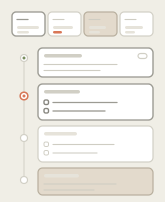
- Keep Markdown
- The sequence is linear and the source commitments are already clear.
- Earn HTML
- Overlap, dependencies, alternatives, or attached evidence change the judgment.
- Stop
- The plan is actionable and traceable without decorative interface work.
When HTML helps
An HTML plan can include:
- side-by-side alternatives;
- timelines with overlapping work;
- dependencies;
- diagrams or working examples;
- expandable detail attached to a step.
If the plan is just a sequence of tasks, keep it simple and use Markdown.
Keep it tied to the source
A plan should preserve the supplied requirements, scope, dependencies, checks, and unresolved questions. It should not invent missing product or technical details to make the plan look complete.
Browse the catalogOpen the HTML, SVG, and interactive examples.